

'Piano Adventures Scale and Chord Book 1': Stealth Creativity!
This is a really powerful resource for introducing improvisation and thinking in a key

Piano Adventures are a deservedly popular series of method books by Nancy and Randall Faber. I really like them and use them with many students of all ages.
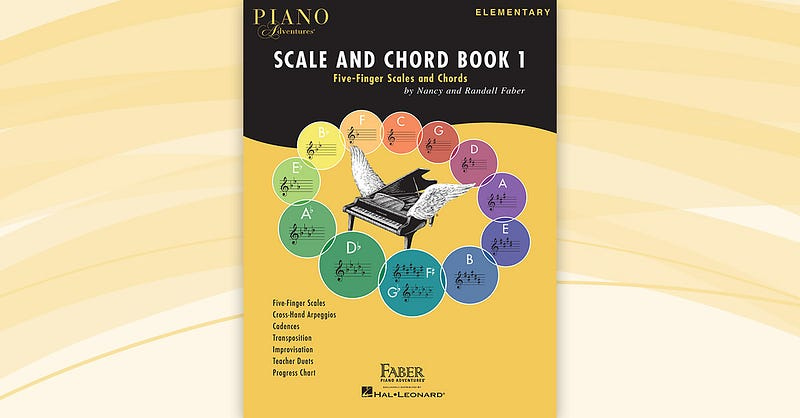
Scale and Chord Book 1 is a relatively obscure one from the series, but I want to highlight it because it’s a really powerful for introducing creativity.
There are several reasons I find this book is so useful. One is because improvisation is introduced so casually: it’s presented as a thing that you automatically do when you’re learning to play the piano. This normalises creativity, which is fundamental to build a student’s confidence.
That differentiates it from most creativity resources, including Forrest Kinney’s Pattern Play series, which I love and use all the time. There the improvisation is the focus, which some students find intimidating. Here creativity is included almost by stealth!
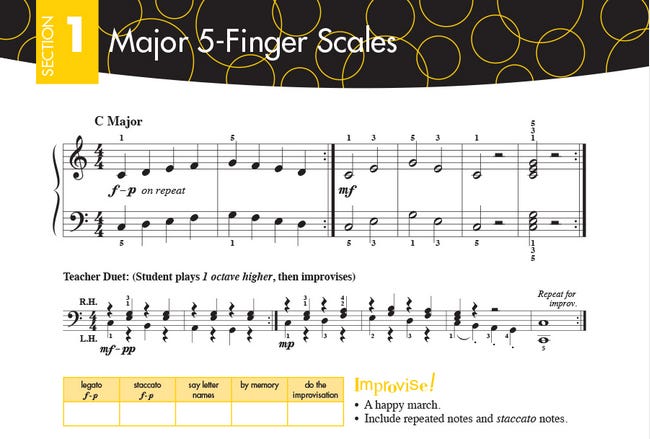
Using the first exercise as an example: first the student plays the C major pentascale (5-note scale) loudly, then quietly, then staccato, then they improvise with prompts saying that it should sound like a “happy march” and that they should include some repeated and staccato notes. The teacher accompanies throughout, so the student doesn’t feel exposed when improvising. I’ve used this with many students and it works brilliantly. It’s fun and accessible.
Unsure about getting creative in piano lessons?
Creating together
Another thing that makes this book so useful is that it has short simple accompaniments for improvisations in all 24 major and minor keys. The accompaniments are very varied, with nods to classical, jazz and contemporary genres. That means you can use it to introduce your student to many keys and many styles: it’s a great resource for getting started. Here’s a video showing the first four accompaniments in C, G, D and A major.
The book is laid out according to the circle of fifths, which means the students get exposed to pentascales in all kinds of unusual positions that they might not normally encounter. The recurrent use of the familiar pattern moving from tonic to dominant and back again helps them to begin thinking in a key, which is a very powerful tool for helping students to understand tonality.
What do you use?
Do you know another scales book that includes improvisation? Let me know in the comments!